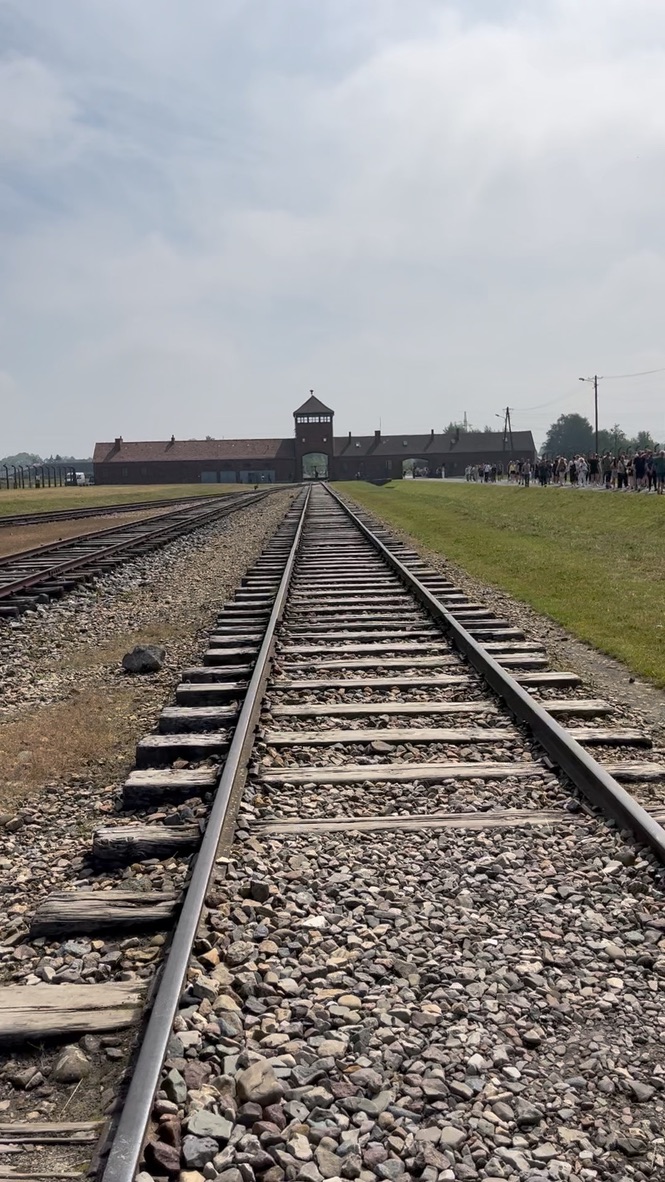
by Amy Houbé
The early stages of extermination at Auschwitz (1941–1942) have long been under-researched compared to 1944 onwards. Unlike the later period, the beginnings of the extermination process suffered from a lack of archival material, leaving a significant historiographical gap. This scarcity of documentation was due in part to the SS’s efforts to keep their operations covert during the early years. However, the recent declassification of records, such as those from the SS Central Construction Board, held in Moscow until the 1990s has provided historians with new sources to reconstruct this critical period. These discoveries have not only fostered the creation of books and studies (see Bartosik, Igor, and al. The beginnings of the extermination of Jews in KL Auschwitz in the light of the source materials. Oświęcim, Państwowe Muzeum Auschwitz-Birkenau, 2014) but have also allowed for a deeper understanding of how Auschwitz gradually transformed into the largest Nazi extermination center. This article reflects on the second lecture of the International Summer Academy, given by Piotr Setkiewicz, which focused on this pivotal period. Drawing from further research, I aim to provide an overview of the early stages of extermination at Auschwitz.
The First Experiments: Zyklon B and Block 11
One of the first stages of the beginning of the extermination program in Auschwitz began in September 1941, when large groups of Soviet prisoners of war were murdered in the basement of Block 11 using Zyklon B. The prisoners’ deaths were officially recorded as being caused by “heart failure” a few days later, illustrating the secrecy surrounding the killings. This experiment demonstrated that Zyklon B could be used for mass murder and marked an important step toward the systematic use of gas chambers. The bodies of those murdered were initially taken to Crematorium I, where they were burned. However, the crematorium was equipped with only two ovens, a deficiency that became acute as the number of bodies quickly surpassed what the facility could process. Besides, another issue was the transportation of bodies from Block 11 to the Crematorium, as it required clearing out the basement cells and carrying the corpses throughout the camp.
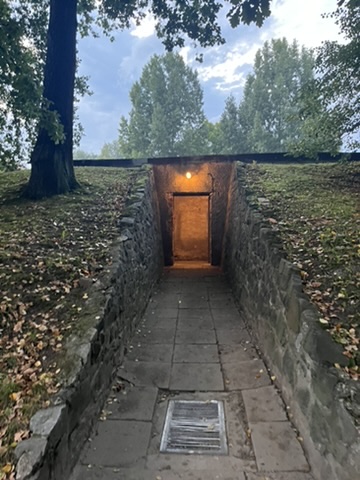
The morgue of Crematorium I was therefore transformed into a gas chamber, with openings made in the roof through which Zyklon B could be introduced. When the crematoria could not cope with the number of bodies, prisoners were also forced to dig large mass graves, particularly Soviet prisoners of war.
At the same time, the Nazis began planning larger facilities. Engineers were involved in designing new crematoria capable of processing much larger numbers of bodies. The decision was eventually made to develop Birkenau (Auschwitz II) as the main site for the expanding system of mass extermination.
The Provisional Gas Chambers: Bunker I and Bunker II
The first provisional extermination facility at Birkenau was Bunker I, known as the “Little Red House.” In March 1942, a house belonging to a Polish family that had been expelled from the area was converted into a gas chamber. The windows were sealed, holes were made through which Zyklon B could be introduced, and a gas-tight door was installed. The building was located outside the main Birkenau camp fence while the camp itself was still under construction. The first mass killings there probably took place around 23 March 1942.
As deportations increased, Bunker II, the “Little White House,” was also converted into a gas chamber. It began operating in 1942 and could kill considerably more people at one time than the first facility. These two buildings were provisional gas chambers: they had no large crematoria attached to them. The bodies of the victims were initially buried in mass graves and later burned in open-air pits when the Nazis began attempting to destroy the evidence of the killings.
Organizing Mass Murder
By March 1942, Auschwitz had already become a place of extermination, even though the large Birkenau crematoria were not yet completed. Trains carrying deportees arrived in increasing numbers, bringing Jews from across Europe, among them Slovakia and occupied Poland. Unlike prisoners sent to concentration camps for forced labor, these transports included women, children, elderly people, and others who were not considered suitable for forced labor. There was generally no normal registration process or photographic documentation of their arrival because the Nazis intended the killings to remain secret.
A small number of Jewish prisoners were temporarily kept alive to deal with the bodies of those who had been murdered. Later, assigned prisoners eventually became part of the Sonderkommando, special units of Jewish prisoners forced to work around the gas chambers and crematoria. Their tasks included removing bodies from the gas chambers, transporting them to the crematoria, and dealing with the remains. The creation of the Sonderkommando was directly connected to the Nazis’ need to organize and conceal the mass murder. (see testimonies from former members of Sonderkommando who survived like Müller, Filip. Eyewitness Auschwitz: Three Years in the Gas Chambers. Chicago, Ivan R. Dee Publisher, 1999 [1979]. See a history of the Sonderkommando, Bartosik, Igor. Witnesses from the Pit of Hell: History of the Auschwitz Sonderkommando. Auschwitz-Birkenau State Museum, 2022.)
The scale of the deportations increased rapidly during the spring and summer of 1942. The Nazis expected particularly large transports from ghettos and other occupied territories. The extermination process was treated as a strictly secret operation. Evidence of the killings can nevertheless be found in surviving documents, including records referring indirectly to gas chambers, doors, construction materials, and deliveries of Zyklon B. The systematic organization of these supplies shows that the killing process was not spontaneous but increasingly bureaucratic and industrialized.
Industrializing Mass Murder: The Construction of Crematoria
Another important stage was the development of Auschwitz during 1942–1943, when SS leaders assessed the camp and considered how to expand its capacity. The planned expansion of Birkenau meant that the existing facilities were completely inadequate for the expected number of prisoners and deportees, both for work and for extermination.
Indeed, it is important to note that Birkenau was not solely an extermination site. From 1942 onward, it functioned simultaneously as a concentration and forced-labor camp. Large numbers of prisoners were registered and kept in the camp, including Poles, Jews, Roma and Sinti, Soviet prisoners of war, and people of many other nationalities. They were subjected to forced labor, starvation, disease, violence and extremely poor living conditions.
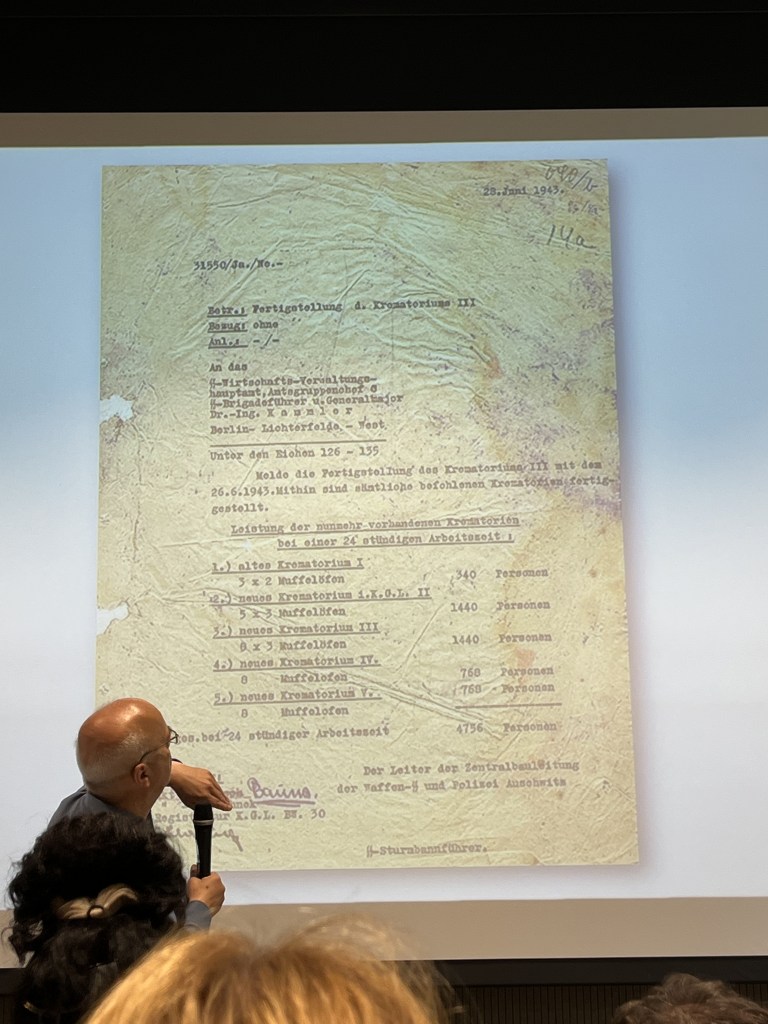
At the same time, many Jews deported to Birkenau were never registered as prisoners: after selection on arrival, those considered unfit for forced labor were sent directly to the gas chambers. The solution to handle those who would be killed was the construction of new, much larger crematoria at Birkenau. These facilities were designed to kill and dispose of thousands of people on a daily basis. By 1943, Auschwitz had become the largest extermination camp in the Nazi camp system. The SS therefore developed plans for much larger, purpose-built facilities combining gas chambers, undressing rooms, and crematoria. Four large crematoria were constructed at Birkenau. Crematoria II and III had underground gas chambers and undressing rooms, while Crematoria IV and V had their gas chambers at ground level. The four facilities became operational between March and June 1943.
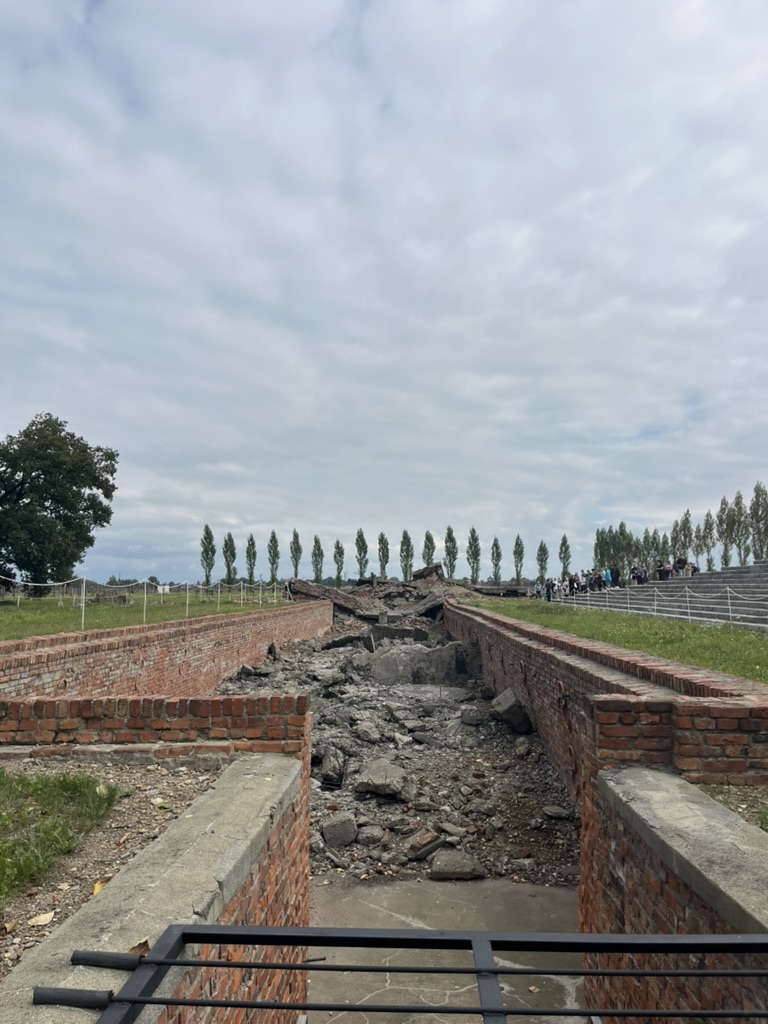
The Auschwitz Memorial estimates the SS-planned cremation capacity at approximately 1,440 bodies per day for each of Crematoria II and III and 768 for each of Crematoria IV and V.
The Hungarian Deportations and the Peak of Extermination (1944)
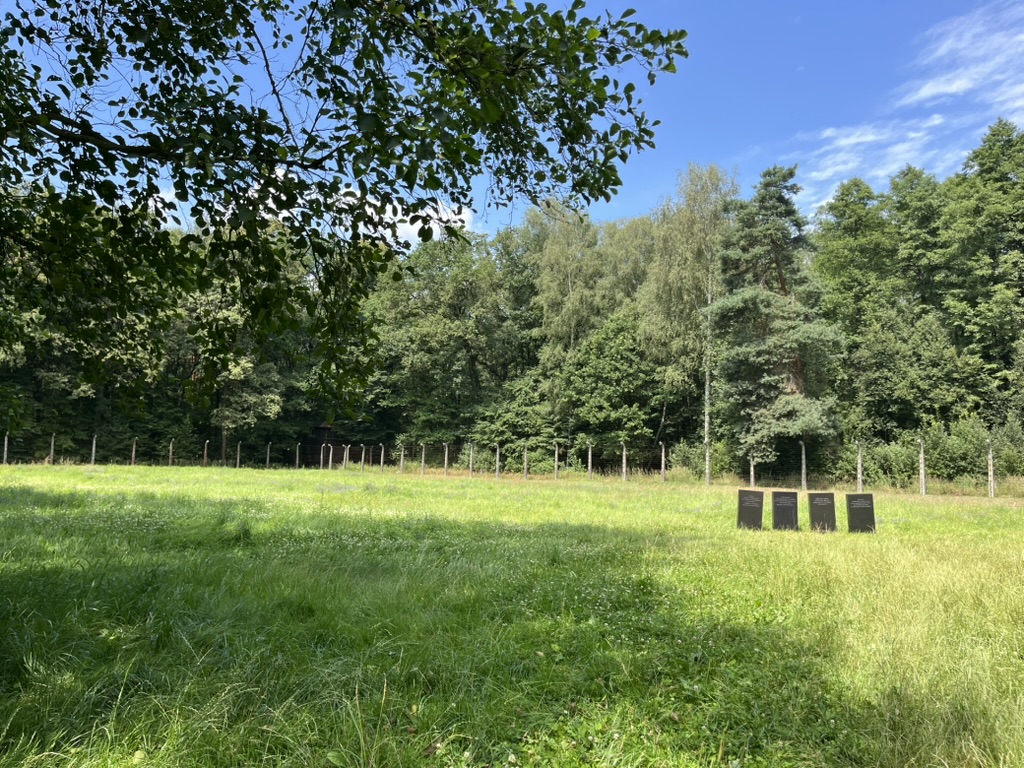
In 1944, the mass deportation of Hungarian Jews marked a new stage in the history of Auschwitz-Birkenau. In preparation for these transports, a new railway ramp was put into operation inside Birkenau in May 1944, bringing deportees directly into the camp and closer to the crematoria than the earlier unloading ramp. Between May and July, around 430,000 Hungarian Jews were deported to Auschwitz, placing enormous pressure on the extermination system. Crematoria II–V were used, but their capacity was insufficient, so the SS also resumed the burning of bodies in open-air pits, particularly near Crematorium V. It was in this area, during the summer of 1944, that members of the Sonderkommando secretly took the four famous photographs documenting the extermination process. The photographs were later smuggled out of the camp and became rare visual evidence of the mass murder taking place at Auschwitz-Birkenau.
Overall, the lecture provided valuable insights into the beginnings of extermination at Auschwitz. It revealed a gradual process of transformation, driven by the radicalization of Nazi persecution, the escalating deportation of European Jews, the development of gas chambers and crematoria, and the creation of increasingly organized systems for mass murder and body disposal. Understanding this evolution is essential to grasping how Auschwitz became the central site of the Nazi extermination of Jews and one of the most enduring symbols of the Holocaust.
Bibliography
Academic books
Bartosik, Igor, and al. The beginnings of the extermination of Jews in KL Auschwitz in the light of the source materials. Oświęcim, Państwowe Muzeum Auschwitz-Birkenau, 2014, 256 p.
Bartosik, Igor. Witnesses from the Pit of Hell: History of the Auschwitz Sonderkommando. Oświęcim, Państwowe Muzeum Auschwitz-Birkenau, 2022.
Testimonies
Müller, Filip. Eyewitness Auschwitz: Three Years in the Gas Chambers. Chicago, Ivan R. Dee Publisher, 1999 [1979], 180 p.
Websites with additional articles
https://www.auschwitz.org/en/history/auschwitz-and-shoah/gas-chambers
https://www.auschwitz.org/en/hebeginningsoftheexterminationinuschwitz
Podcasts
“Transformation of Auschwitz concentration camp into an extermination center”. On Auschwitz (podcast). Ep 4. June 24, 2021.
“The first crematorium and the Sonderkommando in Auschwitz”. On Auschwitz (podcast). Ep 6. July 22, 2021.


Leave a Reply